
In the rapidly evolving global supply chain, commercial warehouses and logistics fulfillment centers are undergoing a structural transformation. No longer simple concrete storage boxes, modern distribution hubs are highly automated, robotics-driven, and energy-intensive facilities. Between automated sorting lines, industrial climate control, and expanding electric vehicle (EV) delivery fleets, electrical consumption is skyrocketing. By transforming hundreds of thousands of square feet of idle rooftop space into integrated **Commercial Solar & Battery Energy Storage Systems (BESS)**, forward-thinking logistics executives are slashing monthly utility overheads by up to 70%, eliminating grid dependency, and fulfilling aggressive corporate ESG mandates.
The Energy Crisis of Modern Warehousing & Logistics
For decades, energy was treated as a fixed, unmanageable operational expense in commercial real estate and logistics. Today, three converging market forces have turned energy management into a urgent executive priority:
First, **commercial utility rates and demand-charge penalties** have risen sharply across North America and Europe. In many industrial jurisdictions, peak demand charges—penalties assessed for short spikes in electrical usage during high-grid-strain hours—account for over 50% of a warehouse's total monthly utility bill. Second, **grid instability and extreme weather events** threaten operational continuity; even a two-hour power outage at a refrigerated cold-storage facility or an automated fulfillment center can result in hundreds of thousands of dollars in spoiled inventory and delayed shipments. Third, Fortune 500 retail and e-commerce giants are enforcing strict **Scope 3 emissions mandates**, requiring their third-party logistics (3PL) partners to operate on 100% renewable energy or risk losing lucrative contracts.
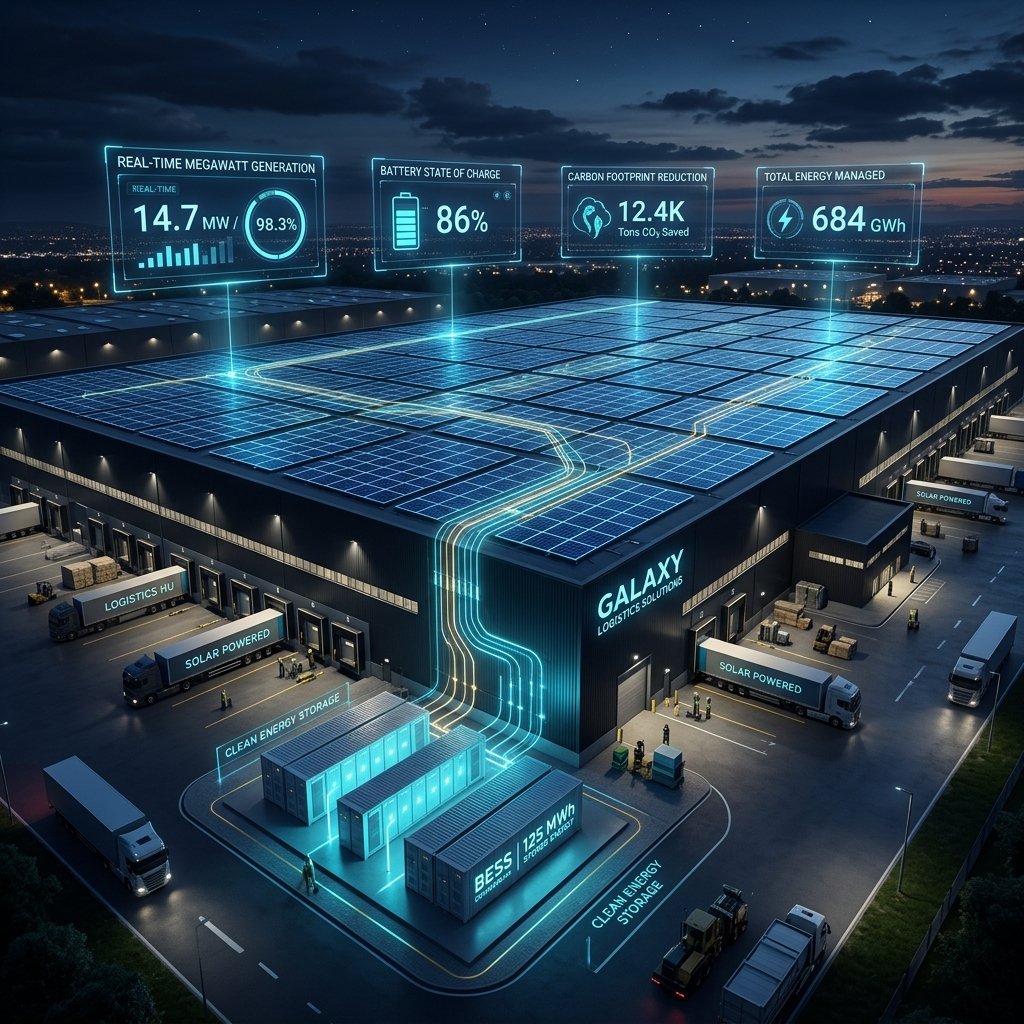 Figure 1: Modern logistics centers utilize unobstructed rooftop real estate to generate multi-megawatt clean power, feeding directly into on-site battery storage systems.
The 3 Pillars of Warehouse Energy Modernization
Achieving true energy independence and maximum financial return requires an integrated infrastructure approach rather than a standalone solar installation. We architect commercial clean energy solutions around three core technological pillars:
☀️ Megawatt Rooftop Arrays
Logistics facilities possess the most valuable solar asset in commercial real estate: vast, flat, unshaded roof footprints. A standard 200,000 sq. ft. warehouse can host a 2.5 MW solar array, generating clean power that directly offsets daily operational loads.
🔋 Battery Storage (BESS)
Solar generation peaks at midday, while warehouse energy demand often peaks during evening fulfillment shifts. Industrial-grade Battery Energy Storage Systems store midday solar energy and discharge it during expensive peak utility rate windows.
🚚 EV Fleet Infrastructure
As last-mile delivery vans and electric yard trucks transition to battery power, plugging fleets into the municipal grid triggers massive demand penalties. Direct solar-to-vehicle microgrid charging keeps fleet fueling costs near zero.
AI-Powered Smart Microgrids & Automated Dispatch
Installing solar panels without intelligent management software is leaving half the financial return on the table. In modern distribution centers, electricity demand fluctuates wildly hour-by-hour based on automated conveyor schedules, chiller cycles, and EV charging spikes.
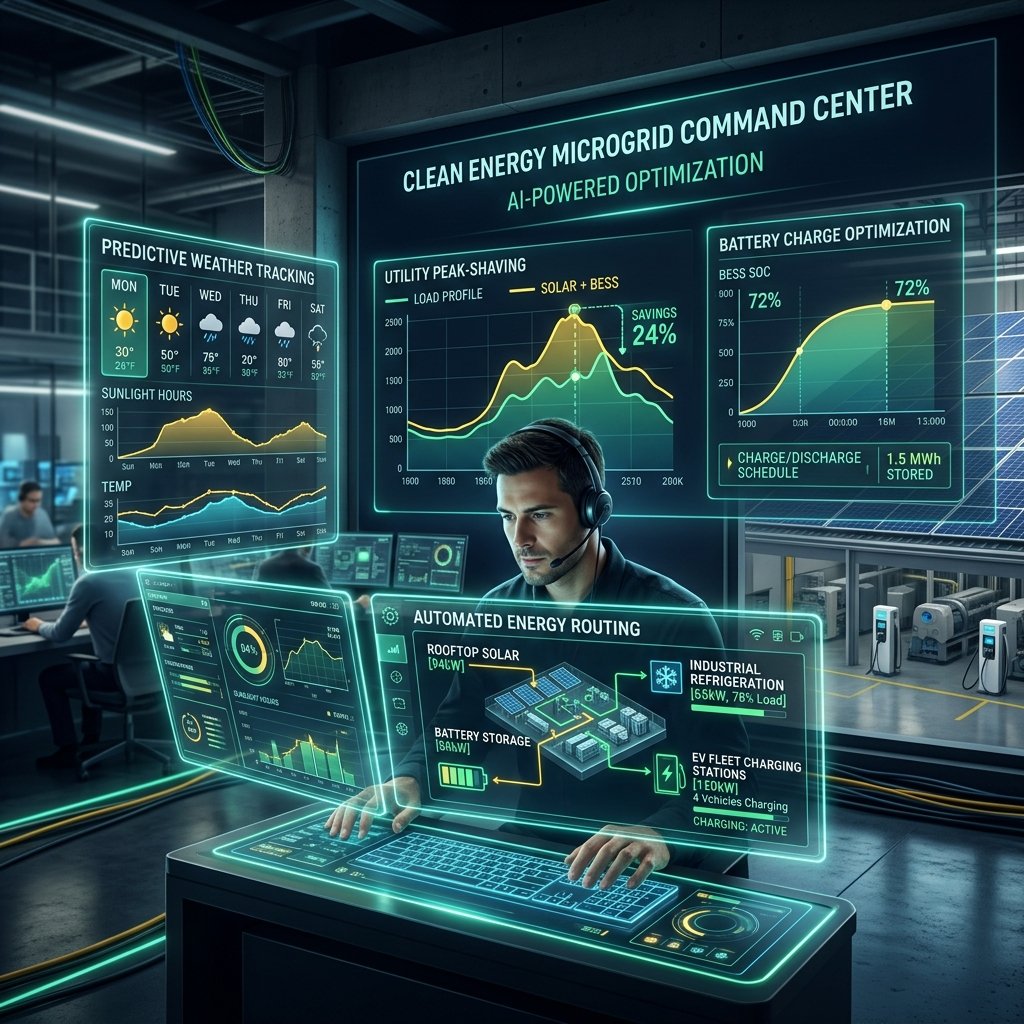 Figure 2: Our AI microgrid software continuously forecasts weather, monitors real-time utility tariff spikes, and autonomously directs battery discharge to eliminate demand penalties.
Rocket AI Services integrates proprietary **AI Energy Dispatch Software** into every warehouse clean energy project. Our intelligent control system acts as an autonomous energy controller:
- Predictive Peak Shaving: The AI monitors utility rate schedules and real-time facility load. Moments before an automated sorting line triggers a massive power spike during peak tariff hours, the software switches the building load instantaneously from municipal utility power to on-site battery storage—avoiding thousands of dollars in demand penalties.
- Weather-Informed Battery Charging: By connecting to real-time meteorological radar and cloud-cover forecasting models, the system decides whether to store midday solar power in BESS units or feed excess energy back into the grid for utility credit (Net Metering).
- Island-Mode Outage Resilience: In the event of a regional municipal power failure, our smart microgrid isolates the facility in milliseconds, powering essential refrigeration, security, and IT server infrastructure seamlessly without noisy, carbon-emitting diesel generators.
Infrastructure Analysis: How Should You Power Your Facility?
| Operational Metric | Municipal Grid Only | Passive Solar (No Battery/AI) | AI-Driven Solar Microgrid |
|---|---|---|---|
| Monthly Energy Overhead | 100% Full Utility Exposure | 25% to 35% Savings | 70% to 85% Savings |
| Peak Demand Penalties | Severe (Up to 50% of bill) | High (Solar doesn't generate at night) | Eliminated via AI Peak Shaving |
| Outage Resilience | Zero (Immediate shut down) | Zero (Inverters shut down by code) | 100% Autonomous Island Mode |
| ESG & Carbon Footprint | High Carbon Intensity | Moderate Carbon Offset | Net-Zero / Scope 3 Compliant |
| Commercial Asset Value | Baseline Valuation | Slight Valuation Increase | Significant NOI & Cap Rate Boost |
"By combining rooftop solar arrays with battery energy storage and AI dispatch software, our distribution center clients have turned dormant warehouse roofs into multi-million dollar clean energy assets that pay for themselves in under four years."
— Rocket AI Services Clean Energy Engineering Team
Financial Incentives & The Commercial Real Estate Case
Beyond operational savings, deploying solar infrastructure offers extraordinary tax incentives and capital appreciation for warehouse owners and REITs (Real Estate Investment Trusts). Under current federal programs like the **Inflation Reduction Act (IRA)**, commercial solar installations qualify for a baseline **30% Investment Tax Credit (ITC)**, which can rise to 40% or 50% with domestic content and energy community adders.
Furthermore, clean energy assets qualify for **Modified Accelerated Cost Recovery System (MACRS)** depreciation, allowing asset owners to write off 85% of the system value over just five years. Crucially, every dollar saved in annual utility expenses flows directly to **Net Operating Income (NOI)**. At a standard 6% capitalization rate, reducing annual utility overhead by $120,000 increases a warehouse facility's valuation by an astounding **$2,000,000**.
A 4-Step Executive Deployment Roadmap
Transitioning a commercial logistics portfolio to clean energy is a streamlined engineering process when executed by experienced solar architects:
- Structural Rooftop & Load Profiling: We perform a comprehensive engineering audit of your roof membrane, structural weight capacity, and 15-minute interval utility load data to determine optimal system sizing.
- Financial Modeling & Incentive Capture: We structure the complete capital stack, modeling federal ITC capture, MACRS tax savings, utility rebate applications, and Solar Renewable Energy Certificate (SREC) monetization.
- Turnkey EPC Engineering: Our certified engineering, procurement, and construction (EPC) teams install roofing arrays, commercial BESS units, and EV charging stations with zero disruption to daily warehouse fulfillment schedules.
- AI Commissioning & 24/7 Monitoring: We commission our proprietary AI microgrid dispatch software, connecting your facility to our 24/7 remote operations center for real-time megawatt tracking and continuous tariff optimization.
Ready to Power Your Warehouse with Clean Energy?
Schedule a confidential solar engineering and financial audit with our clean energy architects. Discover your roof's megawatt potential and calculate your projected NOI increase today.
Request a Free Solar Feasibility Study